How to Clean BBQ Grill with Vinegar and Baking Soda: Simple Steps for Deep Cleaning
Cleaning your BBQ grill using vinegar and baking soda offers a natural method to tackle grease and stuck-on food particles. Soak the grates in a blend of two cups white vinegar combined with one cup baking soda for 8 to 12 hours to loosen heavy grime. The fizzing action from the vinegar and baking soda mix helps lift tough residue, while the gentle abrasive nature works to break down buildup.
Key Takeaways
- Start by scraping loose debris off the grill grates before applying vinegar and baking soda.
- Spray grates generously with white vinegar and let sit for 5 to 10 minutes to dissolve grease.
- Mix two cups vinegar and one cup baking soda in a large bag to soak the grill grates overnight.
- Apply a baking soda paste made from 1½ cups baking soda and ½ cup water to stubborn spots.
- Let the baking soda paste sit at least 8 to 12 hours for optimal grime loosening.
- Use a scrub brush to remove loosened residue after soaking, then rinse and dry the grates.
How to Clean a BBQ Grill Using Vinegar and Baking Soda
Cleaning your BBQ grill grates with vinegar and baking soda combines natural degreasing with gentle abrasion for a thorough deep clean. You will either soak the grates or apply a paste, depending on how dirty they are. For heavy buildup, soaking works best by breaking down grease over several hours. A paste suits less grimy grills or spot cleaning stubborn residue. The bubbling reaction lifts stuck-on food and grease while softening carbon deposits.
- Remove and cool the grates. Let your BBQ grill cool completely before cleaning to avoid injury and damage to materials.
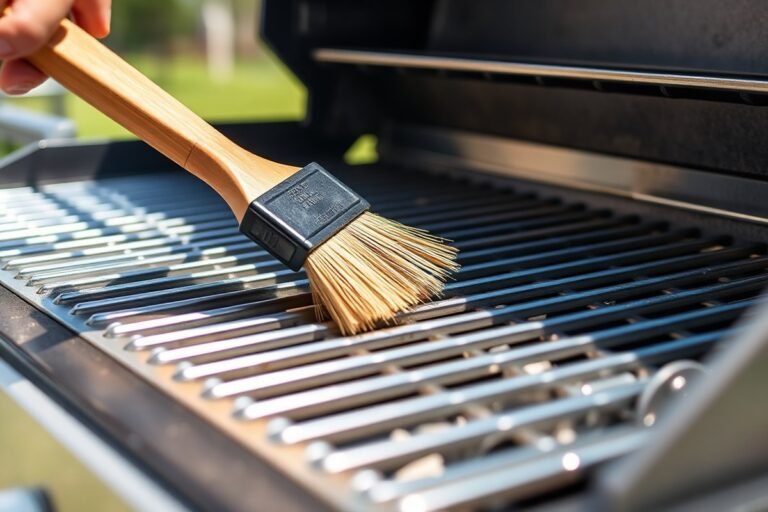
- Scrape loose debris with a stiff brush or scraper to clear away ash, large food particles, and burnt bits.
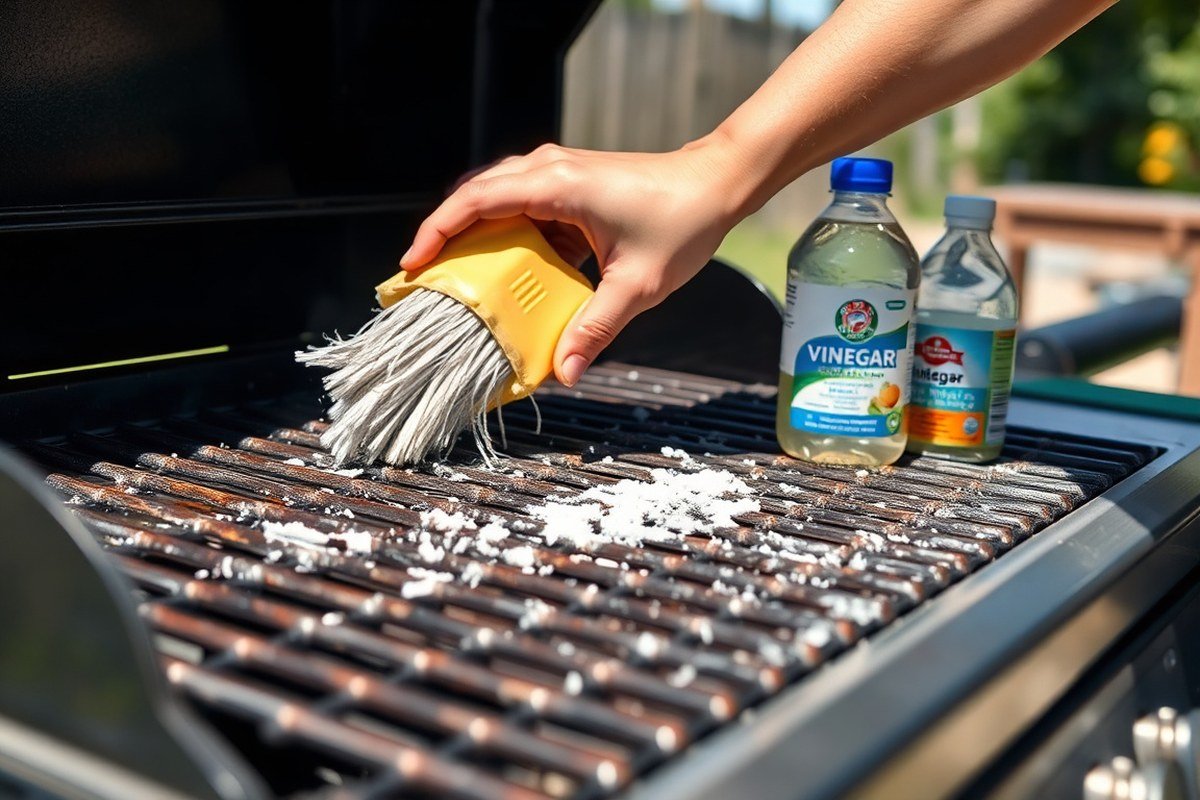
- Spray or soak with vinegar. For light cleaning, spray white vinegar generously over the grill grates and let it sit for 10-15 minutes. For deep cleaning, soak the grates submerged in a mixture of 2 cups white vinegar and 1 cup baking soda inside a plastic bag or container for 8 to 12 hours.
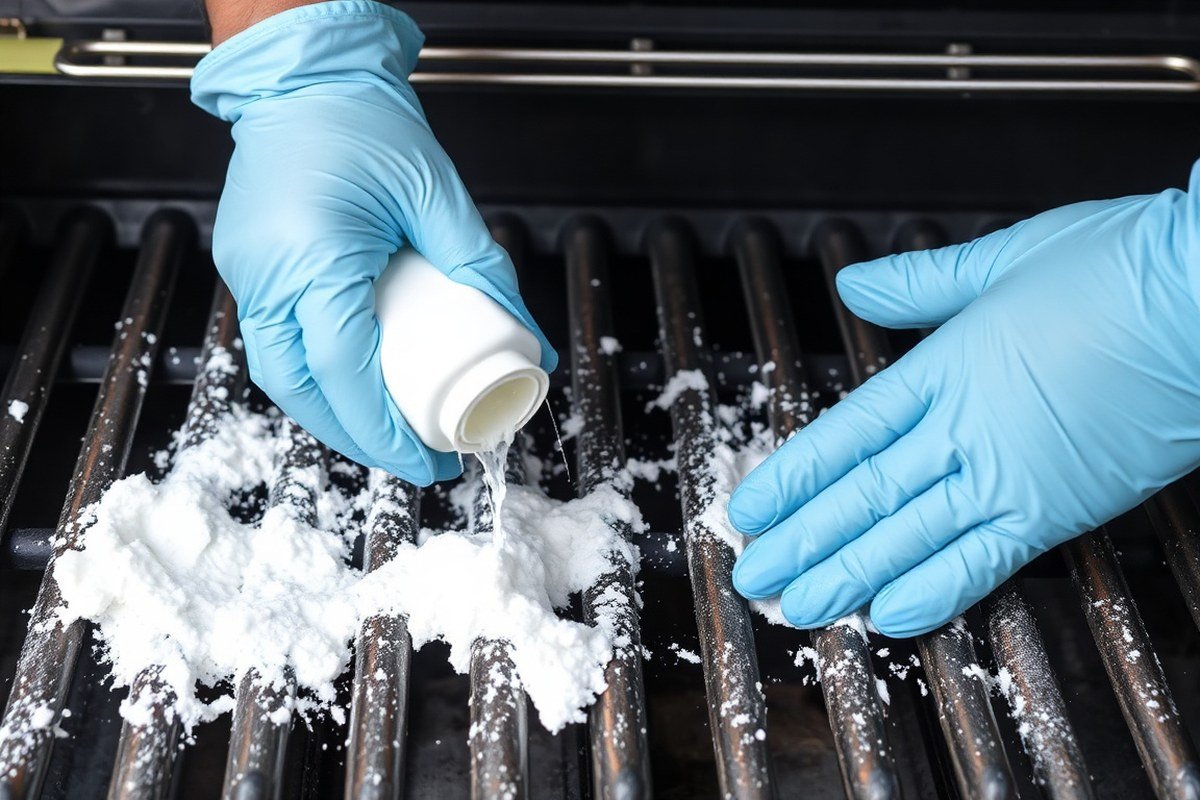
- Make and apply baking soda paste. Mix 1½ cups baking soda with ½ cup water to a spreadable consistency. Spread this evenly on cool, vinegar-treated grates and let it sit overnight (8 to 12 hours) to dissolve tough grime.
- Scrub the grates after soaking or paste soaking period using a nylon brush to protect the grate coating. Focus on stubborn spots with circular scrubbing motions.
- Rinse thoroughly with water, preferably using a garden hose, to remove all vinegar and baking soda residues, leaving no gritty texture behind.
- Dry the grates with a microfiber towel to prevent moisture buildup which can cause rust.
The paste method works best for spot cleaning or regular maintenance, while soaking addresses heavy, caked-on carbon buildup. Leaving the paste or soaking solution on for at least 8 hours allows enough time for the baking soda’s mild abrasiveness and vinegar’s natural degreasing to work together effectively. This technique avoids harsh chemicals, protecting your grill’s metal and your food from contaminants.
Preparing Your Grill and Work Area for Cleaning
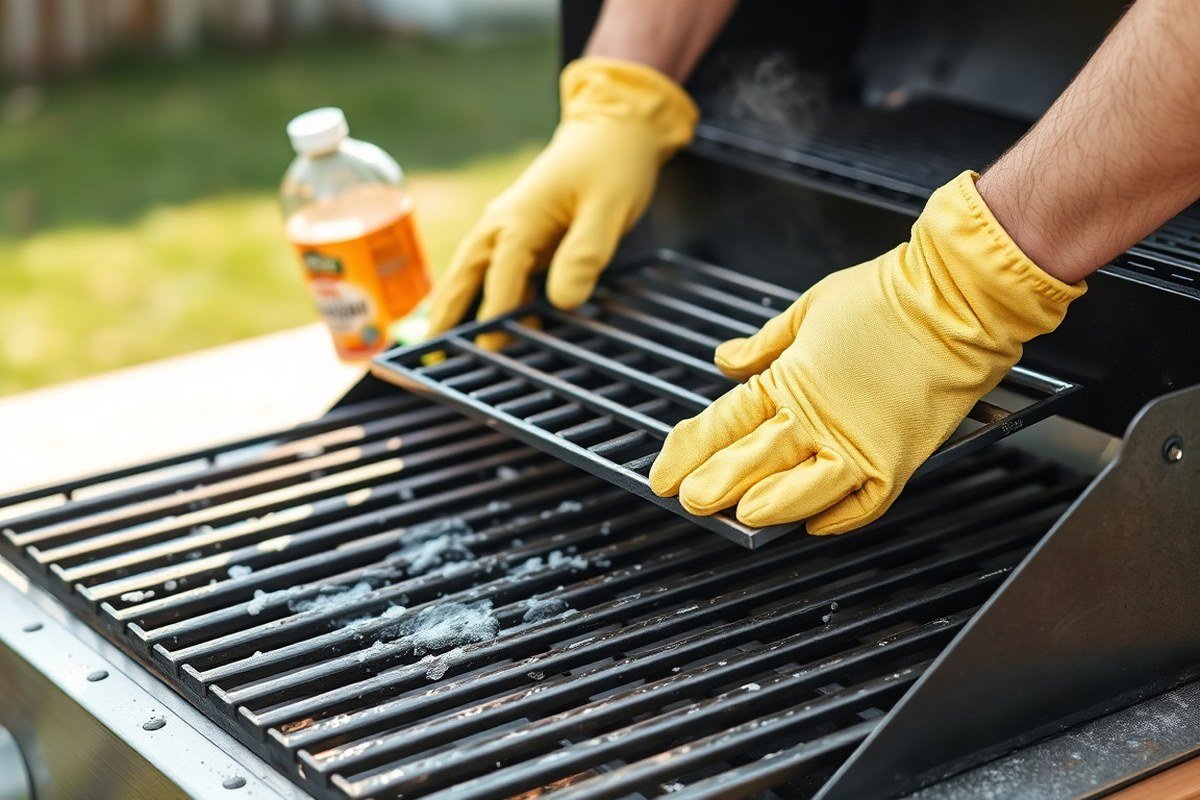
Start by ensuring your grill is completely cooled down before cleaning. This prevents burns and avoids damage to the grill surface when applying vinegar and baking soda. Next, remove all detachable parts like grates, drip trays, and burners to give you better access and prevent damage to non-removable components. Clearing your work area around the grill is important to avoid mess and spills, especially since the vinegar and baking soda reaction can foam and splatter.
Wear protective gloves to shield your hands from irritation caused by the acidity of vinegar and the scrubbing action. Use old clothes or an apron to guard your clothing. Protect surfaces where you place removed parts by laying down newspapers or an old towel, as the vinegar and baking soda paste can stain or damage certain materials.
- White vinegar and baking soda (roughly 2 cups vinegar to 1 cup baking soda for the main cleaning solution)
- Spray bottle to apply vinegar evenly
- Scrub brush or scourer sponge to loosen grime
- Bucket or container for soaking grill grates
- Disposable gloves to protect your skin
- Clean cloths or paper towels for drying and wiping
- Old towels/newspapers to cover surfaces and catch spills
Set up your cleaning solution by mixing the vinegar and baking soda carefully, expect some frothing. Use the spray bottle to apply vinegar directly to greasy surfaces after dusting them with baking soda. For the actual cleaning, allow the paste to sit so it can work on loosening residue. Avoid rushing this part to prevent additional scrubbing or damage. Taking these steps will protect both your grill and work area, making the cleaning process cleaner and safer for you.
Cleaning Other Grill Parts and Handling Tougher Grime
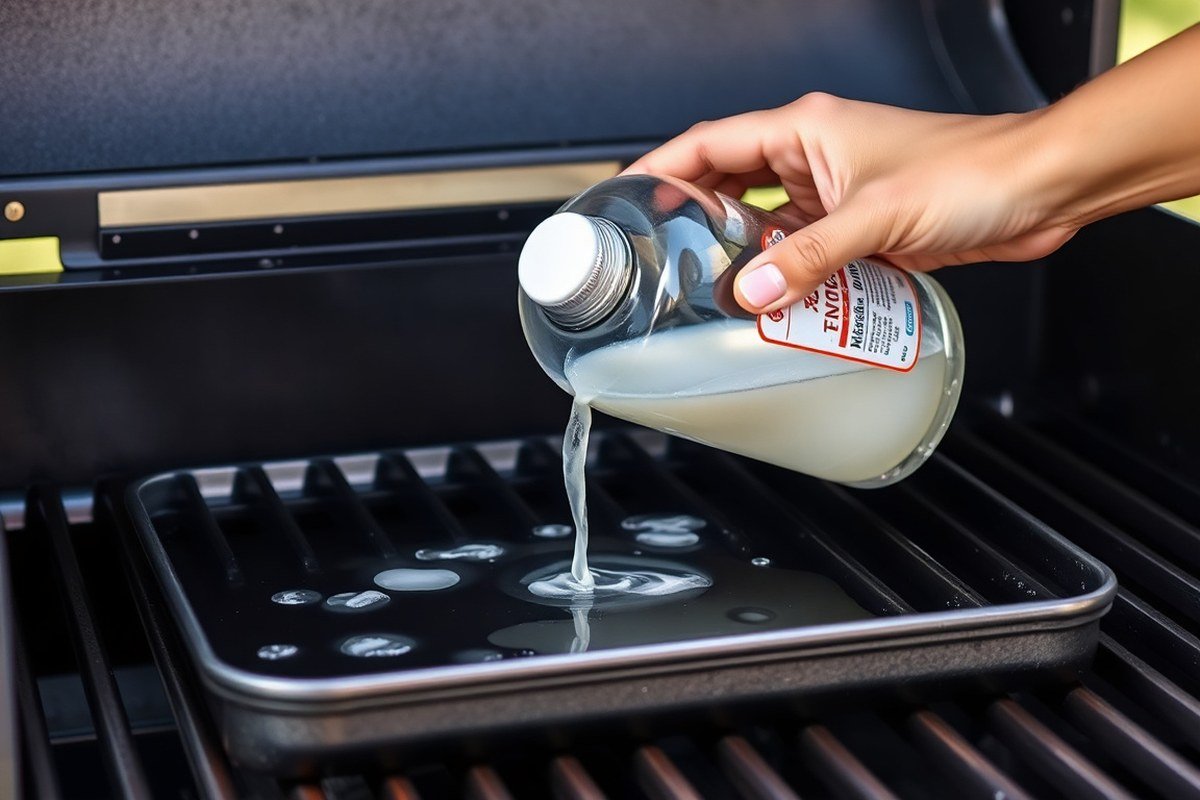
Cleaning other grill parts like burners and drip pans with vinegar and baking soda is effective and helps prevent grease fires. Start by removing drip pans and burners carefully once the grill is cool. Spray white vinegar directly onto these parts to help loosen grease and debris. After letting the vinegar sit for 10 to 15 minutes, apply a thick baking soda paste made from three parts baking soda to one part water. This paste gently breaks down built-up grease and carbon. Allow the paste to sit for about 20 minutes before scrubbing with a brush or sponge. Rinse thoroughly with warm water to remove all residue, then dry completely to avoid rust.
Interior grill surfaces also benefit from spraying vinegar before you scrub. Vinegar cuts through grease and food particles that settle inside the grill basin. Use a cloth or non-abrasive scrubber to wipe down these surfaces after spraying. For areas with stubborn buildup that vinegar and baking soda alone can’t remove, try soaking the removable parts like grates or drip pans overnight in a mixture of two cups vinegar and one cup baking soda inside a large garbage bag. This soaking loosens heavy grease and char, making scrubbing easier the next day.
When vinegar and baking soda do not fully remove tough grime, a stiff brush or scraper can help but avoid harsh metal tools that might damage surfaces. Reapplying the baking soda paste and repeating the vinegar spray after each scrubbing session can also improve results. Regular cleaning and timely removal of parts prevent grime from becoming extremely difficult to remove, maintaining your grill’s performance and safety.
Rinsing, Drying, and Post-Cleaning Maintenance for Longevity
Rinsing and drying your BBQ grill correctly after cleaning with vinegar and baking soda prevents residue buildup and corrosion. Vinegar and baking soda are effective natural cleaners, but leftover traces can attract dirt and moisture if not fully removed. Proper drying is key to avoid rust, especially on metal parts. Keep your grill clean regularly to lower harmful carcinogens in your food by nearly half and extend your grill’s lifespan. Post-cleaning care also includes wiping down the exterior and protecting stainless steel surfaces from damage. Follow these steps to rinse, dry, and maintain your grill:
- Rinse all parts thoroughly with warm water to eliminate vinegar and baking soda residue. Use a hose or a clean sponge to reach all surfaces, including grill grates, drip pans, and trays.
- Scrub stubborn spots with a stiff-bristled wire brush if needed, then rinse again to wash away loosened grime and cleaner.
- Dry every component completely using a clean, dry towel or paper towels. Pay close attention to metal parts to prevent moisture buildup that causes rust.
- Reassemble the grill only after all parts are dry. Moisture left inside can cause corrosion and damage over time.
- Wipe the exterior surfaces regularly with a damp cloth and mild soap to maintain brightness and prevent corrosion, especially on stainless steel.
- Schedule cleaning every 1 to 3 months, depending on how often you grill. More frequent use requires more cleaning to reduce carcinogens and keep your grill in top shape.
- After each use, scrape off food residue and lightly oil the grates to make deep cleanings easier and keep food from sticking.
Maintaining a clean grill with this method costs no more than common household items like vinegar and baking soda. Regular care not only improves food safety and flavour but can add several years to your grill’s life.
Safety Tips and Common Mistakes When Cleaning with Vinegar and Baking Soda
Using vinegar and baking soda to clean your BBQ grill is safe for most grill types, including stainless steel and cast iron. This method avoids harsh chemicals, but you still need to protect your skin and eyes. Both vinegar and baking soda can cause irritation if left on your skin for a long time, so wearing gloves and goggles is a smart safety step.
Common mistakes during cleaning often reduce how well this natural method works. For example, not letting the paste sit long enough, or scrubbing too hard before the baking soda has had time to loosen the grime, can keep grime stuck on your grates. Cast iron grills demand more care; avoid soaking them too long in water to prevent rust, and always dry thoroughly.
- Wear rubber gloves and goggles to protect skin and eyes from splashes
- Apply vinegar and baking soda paste and cover your grates; let sit overnight for deep cleaning
- Do not scrub aggressively right after applying paste to let it break down grease safely
- Rinse and dry cast iron immediately to avoid rust; avoid long water exposure
- Check for stubborn rust or extreme buildup that might require professional cleaning
- Avoid mixing cleaning ingredients in closed containers to prevent pressure build-up
Professional cleaning is a better choice if your grill has severe buildup, rust, or internal damage beyond surface grime. Professionals use special tools and chemicals that reach parts regular cleaning can’t. This natural vinegar and baking soda method works well to maintain your grill with minimal risk, but heavy damage or internal issues need expert help to avoid voiding warranties or causing permanent harm.
Step-by-Step Action Plan for Cleaning Your BBQ Grill with Vinegar and Baking Soda
Follow these steps in order to achieve a clean and well-maintained grill using natural ingredients. Each step ensures your grill stays in top shape for your next cookout.
- Before you start: Gather white vinegar, baking soda, a spray bottle, scrubbing brush, and cleaning cloths. Set up in a well-ventilated outdoor area.
- Step 1: Turn off and cool your grill completely. Remove grates and trays, then spray them generously with vinegar. Let it sit for at least 15 minutes to loosen grime.
- Step 2: Sprinkle baking soda over the vinegar-coated surfaces. You should see bubbling; this reaction helps break down stubborn residue.
- Step 3: Use a grill brush or scrubber to scrub grates and surfaces. Check if the buildup lifts away easily, repeat vinegar and baking soda if spots remain.
- Step 4: Rinse all cleaned parts thoroughly with water to remove residue. Wipe dry with a clean cloth. Dryness means your grill parts are ready for reassembly.
- Step 5: Spray the interior surfaces with vinegar and wipe down with a cloth to remove grease and odors. Let air dry completely before using your grill again.
- After cleaning: Reassemble your grill and apply a light coat of cooking oil to grates to prevent rust. Your grill is now clean and protected for future use.
Frequently Asked Questions
Can I Use Vinegar and Baking Soda to Clean Porcelain Grill Grates?
Yes, vinegar and baking soda work on porcelain grates without damaging them. Just avoid harsh scrubbing that can chip the surface.
How Long Should I Soak Grill Grates in the Vinegar and Baking Soda Mixture?
Soak grill grates for 8 to 12 hours for best results. This break-down time loosens tough burnt-on food and grease.
Is Vinegar Safe to Use on Stainless Steel BBQ Parts?
Vinegar is safe on stainless steel but avoid prolonged exposure. Wipe down and rinse well afterward to prevent discoloration.
Can Vinegar and Baking Soda Clean the Inside of My Gas Grill?
Yes, you can spray the vinegar and baking soda paste inside. Let it sit before scrubbing to tackle grease buildup.
Will Vinegar and Baking Soda Remove Rusty Spots from My Grill?
They can help reduce light rust but won’t remove heavy rust. Use a wire brush for stubborn rust patches first.
Before You Go
Using vinegar and baking soda is an effective and natural way to keep your BBQ grill clean without harsh chemicals. Regular cleaning following these steps will extend your grill’s life and improve cooking performance. Try this method on your next grill cleaning day and notice the difference.